Custom CRM Development in 2026: How to Build a CRM That Actually Fits Your Business
In today's competitive business landscape, customer relationship management (CRM) systems have become indispensable.
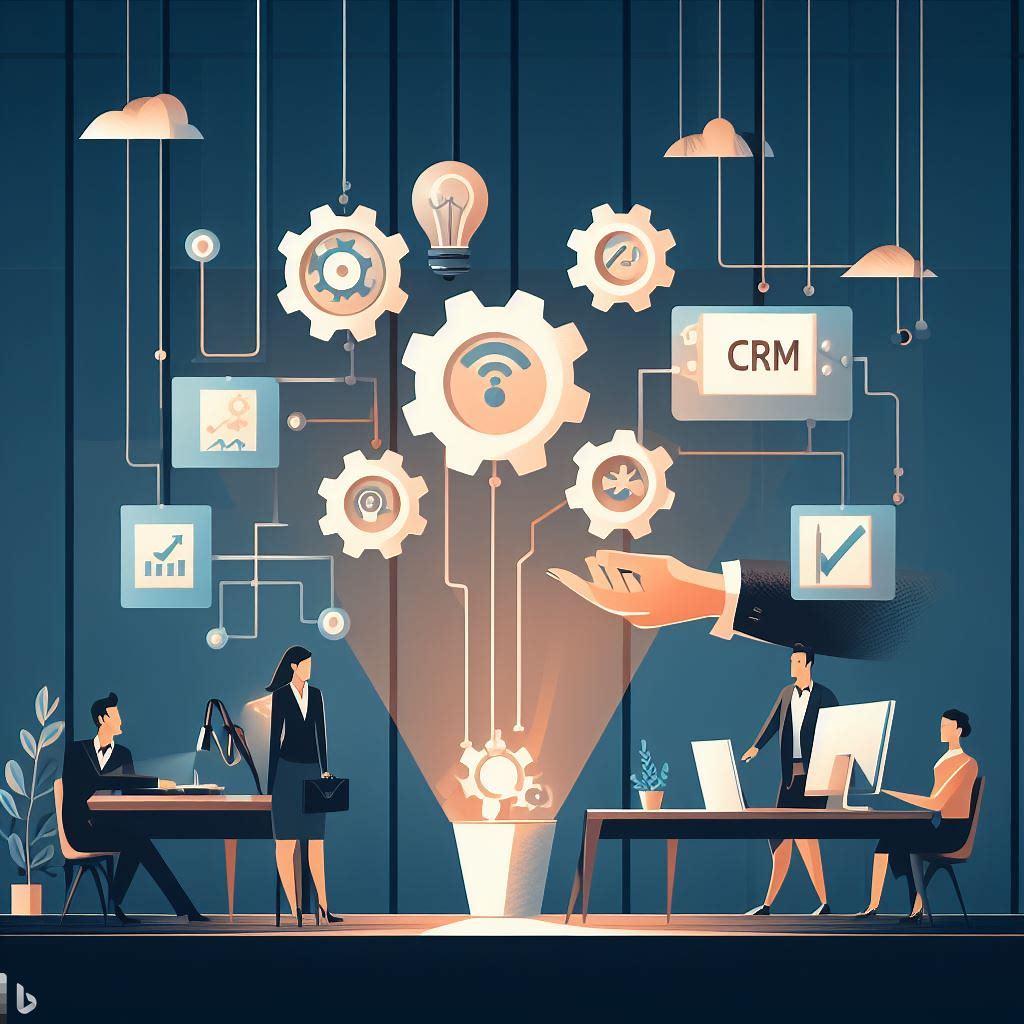
Introduction
Customer relationship management is no longer just about storing contacts, tracking leads, and writing notes after sales calls. In 2026, a CRM is becoming the operational center of the business. It connects sales, support, marketing, finance, customer success, reporting, automation, and now AI-powered decision making.
For many companies, traditional CRM platforms are still useful. Tools like HubSpot, Salesforce, Zoho, Pipedrive, and Monday CRM can work well when your process is simple and close to the standard sales pipeline model. But as soon as your business starts to have specific workflows, custom approval steps, unique customer journeys, industry-specific rules, complex integrations, or internal reporting needs, the limitations become obvious.
This is where custom CRM development becomes a serious business advantage.
A custom CRM is not only a database of customers. It is a system designed around how your company actually works. It can automate repetitive tasks, centralize your data, connect your existing software, give your team better dashboards, and help your business make faster decisions.
In 2026, the strongest reason to build a custom CRM is not simply “customization.” The real reason is control. Control over your workflow, your data, your automation, your customer experience, your integrations, and your future AI capabilities.
What Is Custom CRM Development?
Custom CRM development is the process of designing and building customer relationship management software specifically for the needs of one business or one industry.
Instead of forcing your team to adapt to a ready-made CRM, a custom CRM adapts to your existing business process. It can include sales pipelines, customer profiles, task management, communication history, invoicing, support tickets, internal notes, customer portals, marketing automation, reporting dashboards, AI assistants, document management, and integrations with third-party tools.
The main difference is flexibility.
An off-the-shelf CRM gives you a fixed structure. A custom CRM gives you a business system that follows your real workflow.
For example, a real estate company may need property matching, buyer preferences, viewing schedules, agent commissions, document signing, and mortgage status tracking. A medical clinic may need appointment history, patient communication, treatment plans, consent forms, follow-up reminders, and secure access control. An e-commerce business may need CRM data connected with WooCommerce, Shopify, Stripe, shipping software, email marketing tools, and customer support systems.
All of these businesses need “CRM,” but they do not need the same CRM.
That is why custom CRM development is so valuable.
Why Custom CRM Development Matters More in 2026
The CRM market has changed. Businesses are not only looking for a place to store customer data anymore. They want systems that help them move faster, reduce manual work, improve customer experience, and use AI in a practical way.
The companies that win in 2026 are not always the companies with the biggest software budget. They are the companies with the best internal systems.
A custom CRM can become the backbone of your operations. It can replace messy spreadsheets, disconnected tools, repeated manual tasks, and slow internal communication. When built correctly, it gives your team one trusted place to manage customer relationships and business processes.
The biggest shift in 2026 is that CRM is moving from a passive system of record to an active business automation system.
A traditional CRM stores information.
A modern custom CRM helps your team act on that information.
It can assign leads automatically, detect inactive customers, summarize client history, generate follow-up tasks, send reminders, trigger internal workflows, create reports, connect with AI assistants, and give managers a clear view of what is happening inside the business.
The Main Benefits of a Custom CRM
1. Your CRM Matches Your Real Business Process
Every business has its own way of working. Your sales process, customer onboarding, support flow, approval process, reporting needs, and internal team structure are different from every other company.
Ready-made CRM platforms often force you to work inside their logic. This can create unnecessary steps, confusing fields, duplicate work, and frustrated employees.
A custom CRM is different. It starts with your workflow.
The system can be built around your exact pipeline stages, customer types, team roles, communication channels, document requirements, and reporting structure. This makes adoption easier because the software feels natural to the team.
Instead of asking, “How do we change our process to fit this CRM?” you ask, “How should the CRM support our process better?”
That is the correct question.
2. Better Automation and Less Manual Work
One of the strongest reasons to build a custom CRM in 2026 is automation.
Many businesses still waste hours every week on repetitive tasks. Teams manually copy data between systems, create reminders, update spreadsheets, send the same emails, prepare the same reports, and chase internal approvals.
A custom CRM can automate these steps.
For example, when a new lead arrives from a website form, the system can automatically assign it to the right sales person, create a task, send a confirmation email, enrich the lead profile, notify the manager, and add the contact to a follow-up sequence.
When a deal moves to the next stage, the CRM can generate a document, create an invoice, send a contract, or open an onboarding checklist.
When a customer becomes inactive, the system can trigger a reactivation campaign or notify the account manager.
This is where a custom CRM becomes more than software. It becomes a productivity engine.
3. AI Can Be Built Around Your Own Data
AI is one of the biggest CRM trends in 2026, but many companies are still using it in a very shallow way.
A generic AI feature inside a standard CRM may help you write emails or summarize notes. That is useful, but it is not enough.
The real power comes when AI understands your own business data.
A custom CRM can connect AI features directly to your internal workflows, customer history, documents, sales data, support tickets, product information, and company knowledge base.
This allows you to build practical AI features such as:
- AI lead scoring based on your own sales history
- Automatic customer summaries before a call
- Suggested next steps for sales or support teams
- AI-generated follow-up emails based on customer context
- Internal chatbot trained on company documents
- Customer support assistant connected to tickets and knowledge base
- Churn risk detection
- Smart segmentation for marketing campaigns
- Automated report generation for managers
This is much more valuable than adding a generic AI button to a CRM.
In 2026, businesses should not ask, “Can we add AI to our CRM?” They should ask, “Which business decisions and repetitive workflows can AI improve inside our CRM?”
That is where custom development creates real value.
4. Full Ownership of Your Data
Customer data is one of the most valuable assets in a business.
When your data is spread across spreadsheets, email inboxes, chat tools, accounting software, marketing platforms, and disconnected CRM systems, it becomes difficult to trust. Teams start working with different versions of the truth.
A custom CRM gives your company a single structured place for customer data.
You can decide how the data is stored, who can access it, how it is backed up, how long it is kept, and how it connects with other systems.
This is especially important for companies that work with sensitive customer information, regulated industries, financial data, healthcare data, legal documents, internal pricing, or confidential B2B relationships.
A custom CRM can include role-based permissions, audit logs, two-factor authentication, encrypted fields, GDPR-friendly data flows, and strict access control.
The result is not only better security. It is better trust inside the business.
5. Better Integrations With Your Existing Tools
Most companies already use several tools. They may have a website, accounting software, e-commerce platform, payment provider, email marketing tool, project management system, helpdesk, calendar, document storage, and internal dashboards.
The problem is that these tools often do not communicate well with each other.
A custom CRM can become the central layer that connects them.
For example, it can integrate with:
- Website forms
- WordPress
- WooCommerce
- Shopify
- Stripe
- PayPal
- Mailchimp
- SendGrid
- Google Calendar
- Google Drive
- Slack
- Accounting software
- ERP systems
- Customer support platforms
- Internal APIs
- AI tools and automation services
When integrations are done properly, your team does not need to jump between ten platforms to understand one customer.
Everything important is visible in one place.
This saves time, reduces mistakes, and creates a much better customer experience.
6. Reporting That Actually Helps Managers
Many CRM systems have reports, but not all reports are useful.
Business owners and managers need clear answers:
Which leads are converting best?
Which sales people are overloaded?
Which customers are at risk?
Which marketing channel brings the best clients?
Which deals are stuck?
Which service requests take too long?
Which customers generate the most revenue?
Which process creates delays?
A custom CRM can be designed with dashboards that answer the exact questions your company cares about.
Instead of exporting data, cleaning spreadsheets, and building manual reports every week, managers can see live business performance inside the CRM.
Good reporting changes the way decisions are made.
You stop guessing and start managing based on real data.
Custom CRM vs Ready-Made CRM
A ready-made CRM is usually better when your business is small, your process is simple, and you need a fast setup. If you only need basic contact management, simple pipeline tracking, and standard email follow-ups, using an existing CRM can be the right choice.
A custom CRM becomes the better option when your process is specific, your team is growing, your data is fragmented, your workflows are manual, your industry has special requirements, or your business needs integrations that ready-made platforms cannot handle well.
The question is not whether custom CRM or ready-made CRM is always better.
The real question is this:
Does your CRM support your business model, or is your business adjusting itself to CRM limitations?
If your team is constantly creating workarounds, using spreadsheets next to the CRM, duplicating data, or ignoring CRM fields because they do not match reality, that is a sign you may need a custom solution.
When Should a Business Build a Custom CRM?
A custom CRM is usually worth considering when the cost of inefficiency becomes higher than the cost of building the software.
Here are common signs:
Your team uses spreadsheets because the current CRM does not support your workflow.
Your sales process has custom stages, approvals, or internal rules.
Your customer data is spread across many tools.
Your team repeats the same manual tasks every day.
You need custom dashboards or industry-specific reporting.
You need strong integrations with internal software.
You want AI features based on your own company data.
You want full control over security, permissions, and data storage.
You are paying high monthly fees for CRM features your team does not use.
You want to build a long-term software asset for your business.
If several of these points sound familiar, custom CRM development can create serious value.
What Features Can a Custom CRM Include?
A custom CRM can start small and grow over time. The best approach is not to build everything at once. The best approach is to build the core system first, then improve it based on real team usage.
Common features include customer profiles, lead management, sales pipelines, task management, reminders, communication history, email templates, file uploads, contract management, quotes, invoices, support tickets, customer portals, employee roles, permission control, reports, dashboards, automation rules, calendar integrations, and AI assistants.
More advanced custom CRM systems can include predictive analytics, customer health scores, automated lead scoring, document generation, payment tracking, marketing segmentation, WhatsApp or SMS communication, API integrations, and internal knowledge base search.
The important part is not how many features the CRM has.
The important part is whether the features solve real business problems.
A simple CRM that saves your team ten hours per week is more valuable than a large CRM full of unused modules.
The Role of AI in Custom CRM Development
AI should not be added to a CRM only because it is trendy. It should be added where it improves speed, accuracy, or decision making.
In a custom CRM, AI can support both internal teams and customers.
For sales teams, AI can summarize customer history, suggest follow-up messages, score leads, and identify the next best action.
For support teams, AI can summarize tickets, suggest answers, find similar cases, and detect urgent problems.
For managers, AI can prepare weekly summaries, detect pipeline risks, explain revenue changes, and highlight unusual customer behavior.
For customers, AI can power smart portals, chat assistants, guided onboarding, and faster support.
The most important thing is context. AI works better when it has access to structured, relevant, and accurate business data.
That is why a custom CRM is a strong foundation for AI adoption. It gives the business clean data, clear workflows, and controlled access to company knowledge.
How Entro Solutions Builds Custom CRM Systems
At Entro Solutions, we approach custom CRM development as a business system, not just as a software project.
The first step is understanding how the company works today. We look at the current sales process, customer journey, team roles, data sources, manual work, reporting problems, and software tools already in use.
Then we define the core CRM structure. This includes customer records, pipeline stages, user roles, dashboards, automation rules, integrations, and the most important workflows.
After that, we build the first practical version of the CRM. The goal is to create a system that solves the main operational problems without overcomplicating the first release.
Once the team starts using the CRM, we improve it with real feedback. This is where custom CRM development becomes powerful. The system can evolve together with the company.
A good CRM is never just a one-time project. It becomes a long-term digital asset.
Why Laravel Is a Strong Choice for Custom CRM Development
For many custom CRM projects, Laravel is a strong technical foundation.
Laravel is flexible, secure, scalable, and ideal for building business applications, dashboards, admin panels, APIs, automation workflows, and integrations. It allows developers to create exactly the structure the business needs without being limited by a ready-made CRM platform.
A Laravel-based CRM can be connected with modern front-end frameworks, third-party APIs, payment systems, email services, AI providers, reporting tools, and mobile apps.
It is also a good choice when the CRM needs to grow into a larger internal platform over time.
For example, a company may start with customer management and sales tracking, then later add invoicing, document management, AI assistants, customer portals, or mobile access.
This makes Laravel a practical option for businesses that want control, flexibility, and long-term growth.
How Much Does Custom CRM Development Cost?
The cost of custom CRM development depends on the complexity of the system.
A small internal CRM with customer records, lead tracking, user roles, and basic dashboards will cost much less than a large CRM with AI features, complex integrations, customer portals, automation rules, and advanced reporting.
The best way to think about cost is not only as a software expense. It should be compared to the cost of manual work, lost leads, slow reporting, poor customer experience, duplicate data, and high subscription fees across many tools.
A well-built custom CRM can reduce operational waste, improve team productivity, and create a system that supports the business for years.
For many companies, the return comes from time saved, better follow-up, faster sales cycles, fewer mistakes, and better management visibility.
Custom CRM Development Is Not for Every Business
It is important to be honest. Not every company needs a custom CRM.
If your business is small, your workflow is simple, and your team is already happy with an existing CRM, it may be better to continue using that platform.
Custom CRM development makes the most sense when your business has specific processes, integration needs, automation requirements, data ownership concerns, or growth plans that cannot be handled properly by standard CRM software.
A custom CRM should solve real problems.
It should not be built only because it sounds impressive.
The best custom CRM projects start with a clear business need, not with a long list of random features.
Final Thoughts
In 2026, customer relationship management is becoming more intelligent, more connected, and more automated. Businesses no longer need software that only stores customer information. They need systems that help them act faster, serve customers better, and make smarter decisions.
Custom CRM development gives companies the freedom to build around their real operations.
It allows the CRM to match the business instead of forcing the business to match the CRM.
With the right strategy, a custom CRM can centralize customer data, automate manual work, connect existing tools, improve reporting, support AI features, and become one of the most valuable internal systems in the company.
If your current CRM feels limiting, your team depends on spreadsheets, or your customer data is spread across disconnected tools, it may be time to consider a custom CRM built for the way your business actually works.
Entro Solutions helps companies design and develop custom CRM systems, internal dashboards, automation platforms, and AI-powered business tools.
If you want to build a CRM that fits your business instead of changing your business to fit generic software, contact Entro Solutions and let’s discuss your project.
FAQ
What is custom CRM development?
Custom CRM development is the process of building customer relationship management software around the specific workflow, data, users, and goals of one business. It gives companies more flexibility than standard CRM platforms.
Is custom CRM better than Salesforce or HubSpot?
Not always. Salesforce, HubSpot, Zoho, and similar platforms are good options for many businesses. A custom CRM is better when your company has specific workflows, integrations, reporting needs, or automation requirements that standard platforms cannot support properly.
Can a custom CRM include AI features?
Yes. A custom CRM can include AI lead scoring, customer summaries, smart follow-up suggestions, support assistants, internal knowledge search, automated reporting, and other AI features based on your own business data.
How long does it take to build a custom CRM?
A simple first version can often be built in weeks, while larger systems with integrations, automation, AI features, and customer portals may take several months. The best approach is usually to build the core CRM first, then improve it in phases.
What businesses need a custom CRM?
Custom CRM development is useful for companies with unique sales processes, complex customer journeys, manual workflows, disconnected systems, special reporting needs, or industry-specific requirements.
Can a custom CRM integrate with my website?
Yes. A custom CRM can integrate with your website forms, WordPress, WooCommerce, Shopify, Stripe, email marketing tools, calendars, accounting software, support systems, and many other platforms.
Is Laravel good for custom CRM development?
Yes. Laravel is a strong framework for custom CRM development because it is flexible, secure, scalable, and well-suited for dashboards, APIs, business workflows, automation, and custom admin systems.
Why should I choose Entro Solutions for custom CRM development?
Entro Solutions has long-term experience building custom web platforms, internal systems, dashboards, automation tools, and business software. We focus on practical CRM systems that match the real workflow of the business and create long-term operational value.